
Can your customers find you?
The Bahamas Digital Readiness Index (BDRI) looks at how easily customers find a business online. Its edition read 2,600 businesses.
Bahamas Digital Readiness Index : How Businesses Show Up Online and What Comes Next
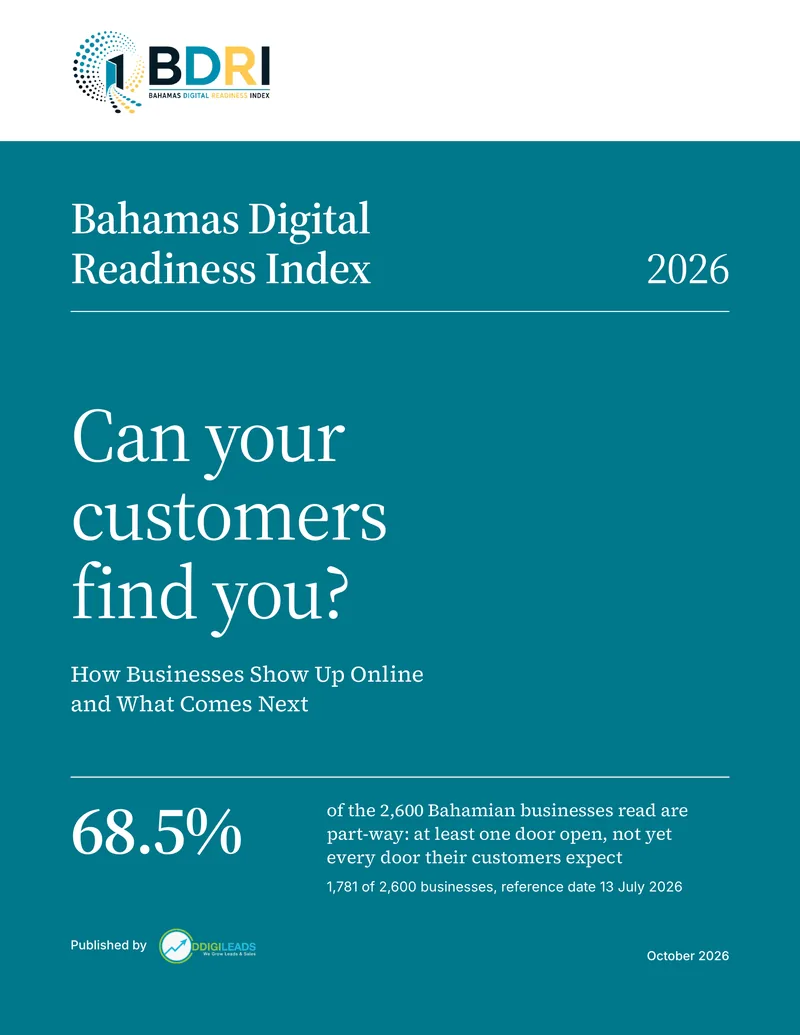
PDF, 59 pages, 1.0 MB, tagged for screen readers. Free to read and download with no sign-up, and it opens in your phone’s or your browser’s own PDF reader.
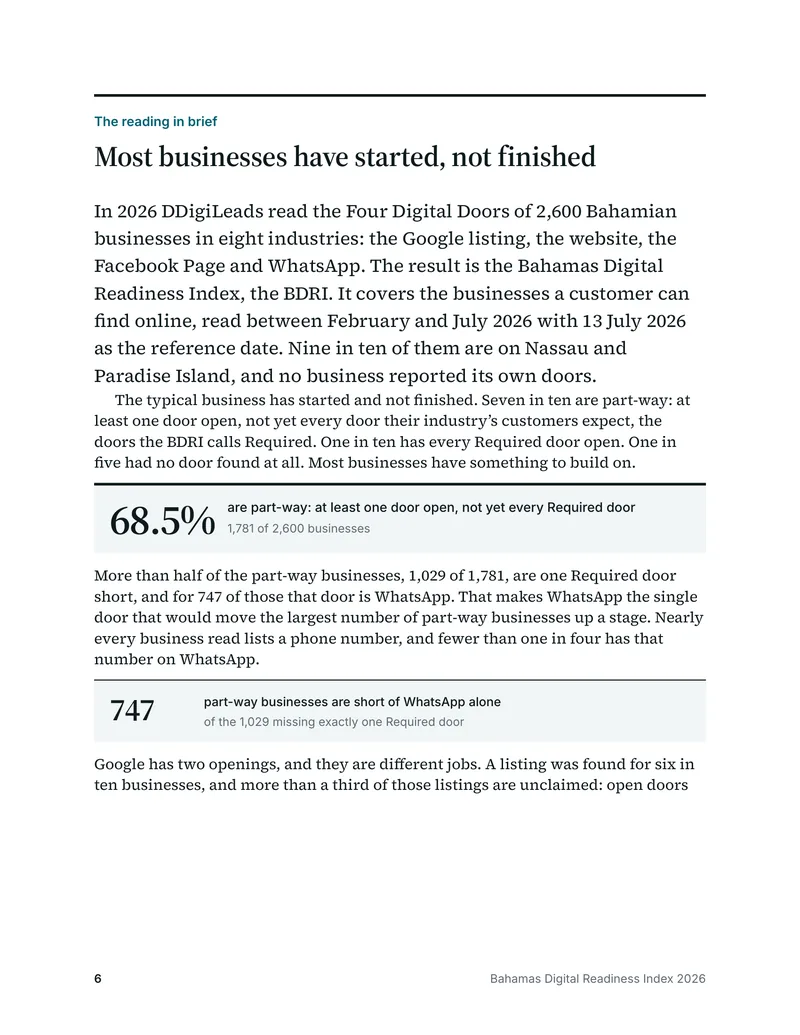
Most businesses have started, not finished
68.5%
of businesses in the index are part-way, at Doors Opening: a door open, an expected door still shut
-
2,600
Bahamian businesses read and scored in the index
-
78.8%
of the 2,600 businesses read have at least one door open
-
1,026
of the 2,600 businesses read have no Google listing found
A customer looks a business up at the Four Digital Doors: its Google listing, website, Facebook Page (the business page, not a personal profile) and WhatsApp. Each industry’s customers expect certain doors. A business at Doors Opening is part-way: at least one door open, an expected door still shut. About four in five businesses have a door open, and most of them are at Doors Opening, with a door to build on.
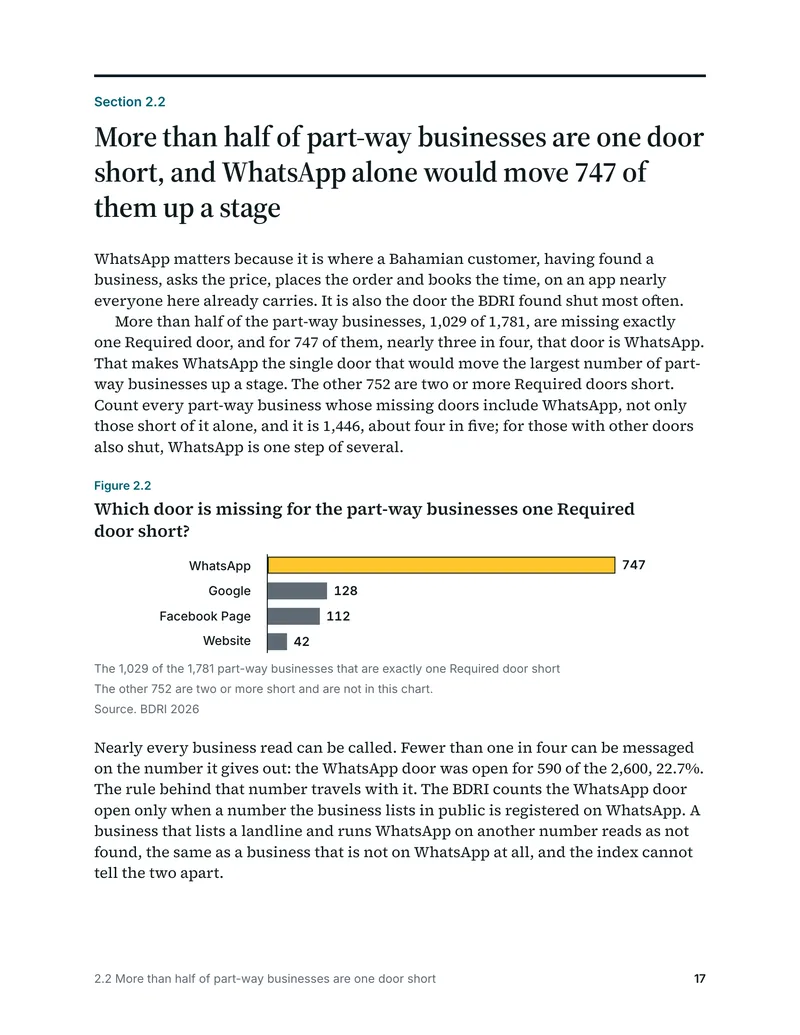
WhatsApp is the door that would move the most part-way businesses up a stage. The step is putting WhatsApp on the number customers see on the business’s other doors, and it waits on nobody.
The Google listing is the door found open most often. It counts as an open door once a customer can find it, claimed or not; claiming is the business taking charge of the listing. Google’s two openings are different jobs: where a listing was found unclaimed, claim it; where no listing was found, create one.
What the report covers
-
The reading in brief: the main findings, and where an owner and an institution start.
-
Part 1, The customer looks first: the Four Digital Doors, the doors each industry expects, and how a stage is read.
-
Part 2, The national picture: where businesses stand, why WhatsApp would move the most part-way businesses up a stage, the businesses with a Google listing still to claim or create, and website and Facebook Page links that no longer work.
-
Part 3, Where the doors are heading: what AI assistants read, and the website that takes bookings and payments.
-
Part 4, The industries: each industry read on its own, then a study of what customers say in Google reviews of restaurants and tourism businesses.
-
Part 5, What owners can do first: the Google listing, then WhatsApp, with the moves for each stage.
-
Part 6, For institutions: the target to set, why Google belongs in a programme’s first session with owners, and how to measure before and after.
-
How the BDRI was read: from when a door counts as open to what the index cannot see; then the section about the publisher, with both authors’ biographies.
Inside the report
-
The reading in brief: the main finding, with cards on the share of businesses that are part-way and on the part-way businesses whose one missing expected door is WhatsApp. -
From Part 2: for part-way businesses missing just one expected door, a bar chart of which door it is, with WhatsApp the longest bar. -
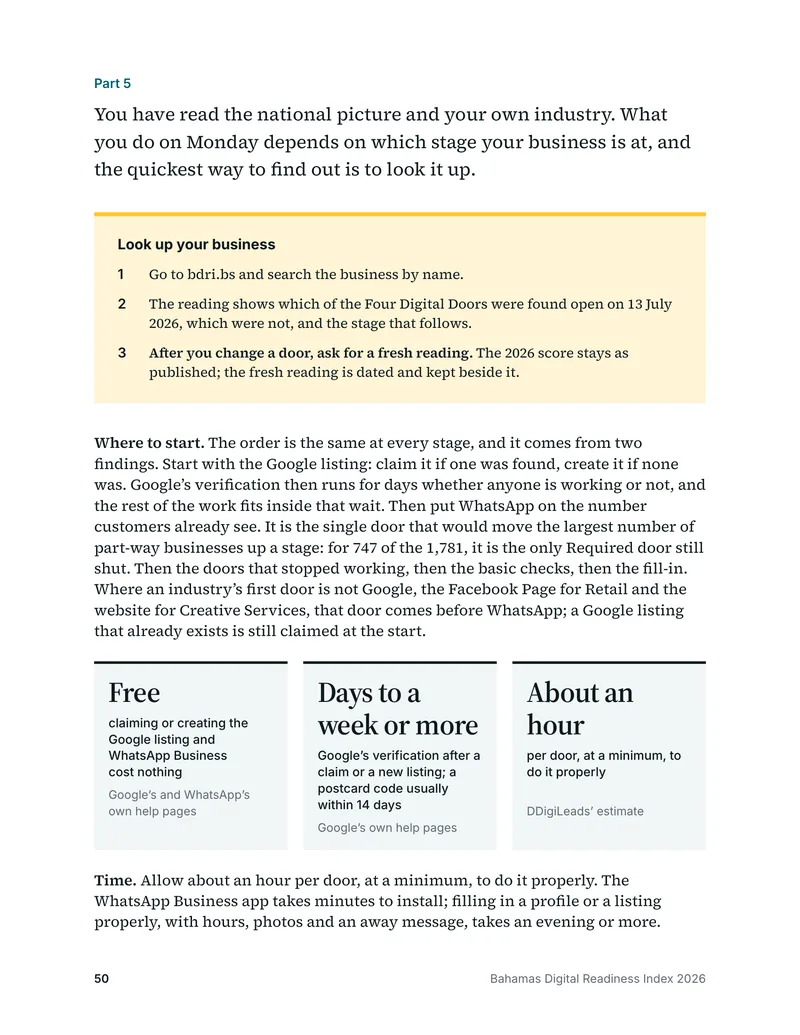
From Part 5, for owners: how to look up your business at bdri.bs, where to start, what the first steps cost and the wait for Google’s verification.
The full tables, and your industry
Annex A, a webpage of this site, covers industries, islands, claimed Google listings and where website and Facebook Page links led.
Go to the tables in Annex AThe Index webpage puts your industry’s figures next to the country’s and names the doors your industry’s customers expect.
Compare industries on The Index